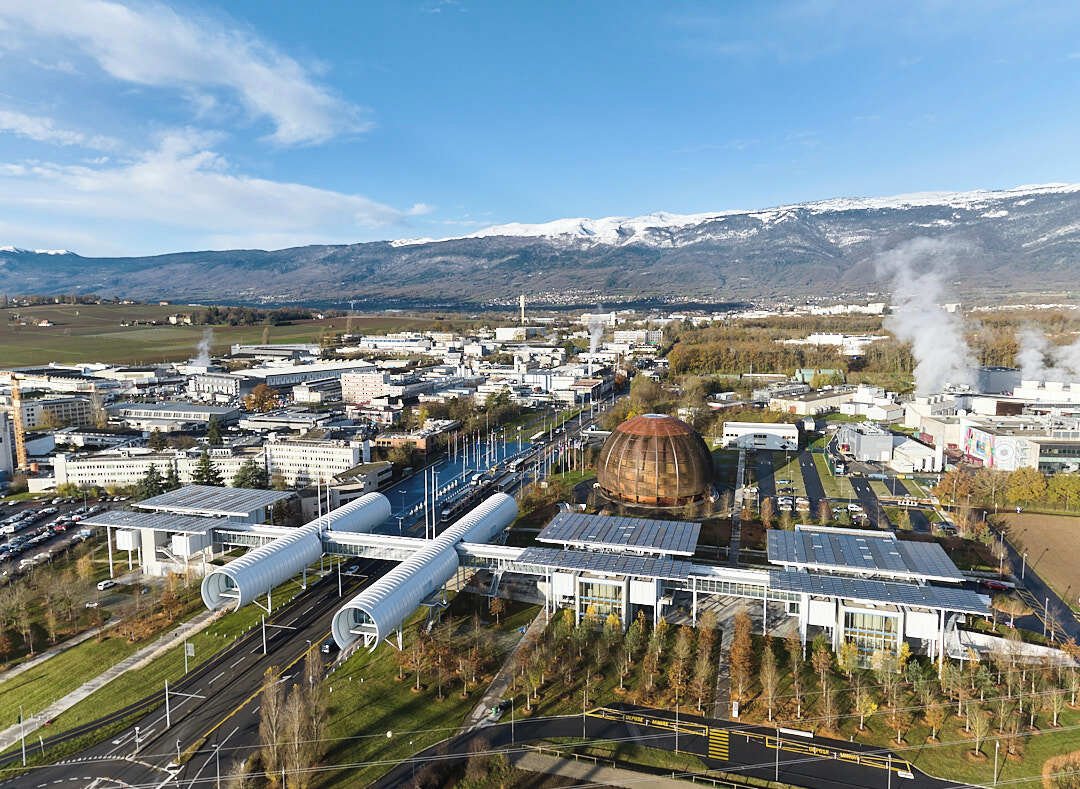
Advancing the frontiers of technology
A myriad of engineers, technicians and scientists develop novel technology and expertise that can be applied to fields beyond high-energy physics. From materials science to computing, particle physics demands the ultimate in performance, making CERN an important testbed for industry – including large companies, SMEs or recent start-ups. CERN also engages with other stakeholders, such as policy makers, especially those active in CERN's Member States and Associate Member States.
Impact across industries
The scientific advancements of CERN push the frontiers of technology, which has a positive impact on society globally. The transfer of CERN technologies and expertise to society is an integral part of these activities, providing novel solutions in many fields.
The best-known technology is the World Wide Web, invented at CERN in 1989 as a way for a large number of scientists to share information. For many of us today, life without the Web seems inconceivable. Equally revolutionary is the Grid, which harnesses the power of computers around the world. It was developed at CERN to process the vast amounts of data collected by the LHC experiments.
CERN's basic tools – particle accelerators and detectors – also have applications in everyday life. Invented to explore the fundamental constituents of matter, thousands of particle accelerators are in operation in the world today, of which only a small percentage are used in basic research. The vast majority find applications ranging from medical diagnosis and therapy to computer chip manufacture.
Without the know-how obtained in particle physics, progress in many fields of research, medicine and industry would be slower. CERN, in partnership with industry, gives companies expertise that they can apply elsewhere, enabling CERN technology to reach society quickly for the benefit of everyone.
"Cutting-edge technologies, advanced know-how, unique accelerator facilities: we develop these tools to satisfy our scientific ambitions, and they turn into real-world applications thanks to fruitful collaborations with academic, institutional, and private sector partners."
Although the core mission of the Laboratory is fundamental research in particle physics, it also has a remit to train the next generation of scientists and to bring nations together.